
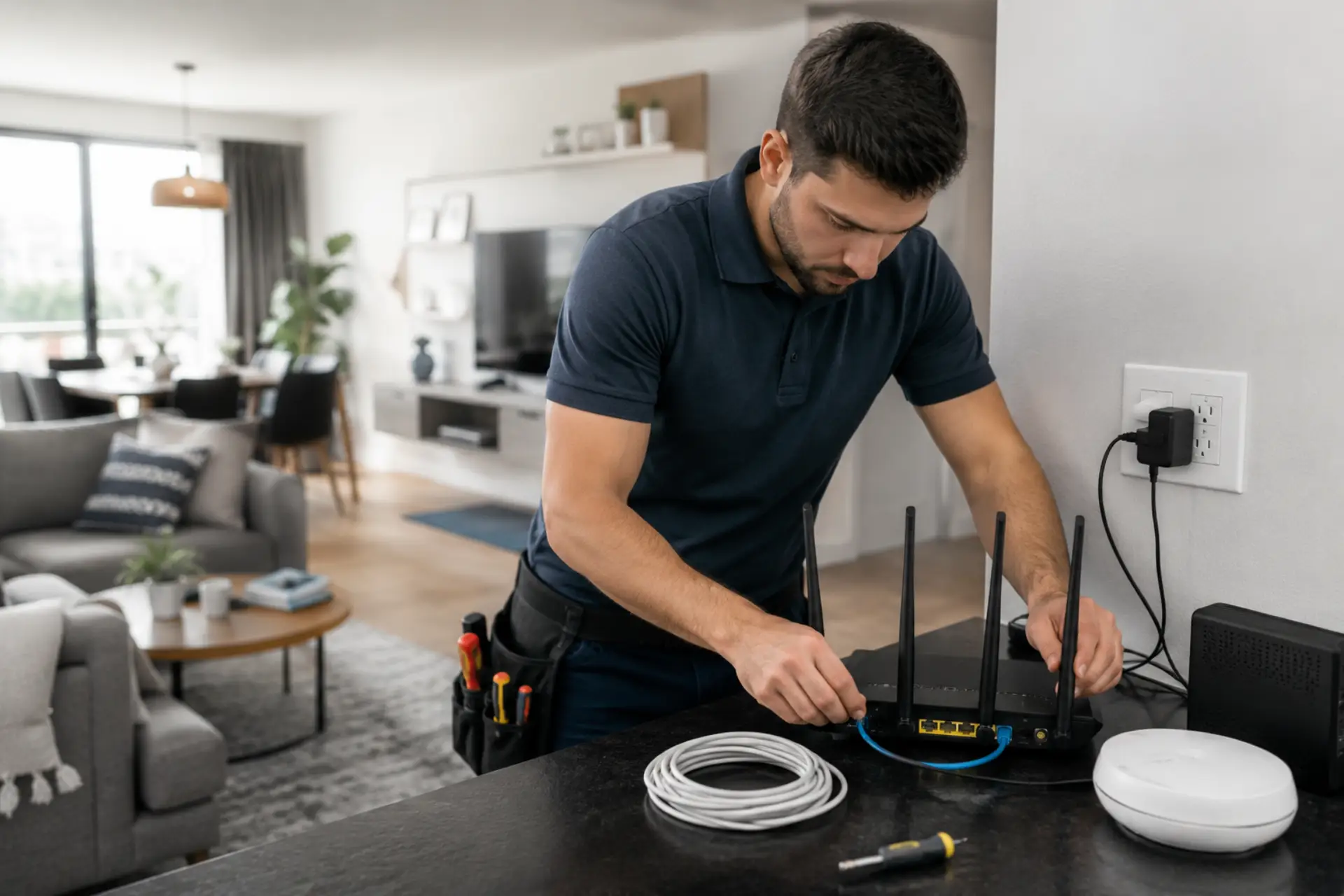
A Professional WiFi Installation ensures your internet network is designed, installed, and tested for reliable coverage, stable speeds, and secure connectivity. Instead of simply connecting a router, professionals evaluate your property, identify signal challenges, optimize equipment placement, and configure the network for long-term performance. Whether for a home or commercial property, a properly planned installation minimizes dead zones, improves device connectivity, and reduces future troubleshooting.
Why Professional Installation Makes a Difference
Modern homes and workplaces rely on dozens of connected devices. Streaming, video conferencing, cloud applications, smart home systems, and security cameras all require a strong wireless network.
A professional installer considers factors such as:
- Building layout and construction materials
- Internet usage requirements
- Number of connected devices
- Coverage expectations
- Security requirements
- Future network expansion
This planning creates a network that performs consistently instead of relying on trial-and-error equipment placement.
What Happens Before Installation
The first stage focuses on understanding your networking needs rather than immediately installing equipment.
The installer typically discusses:
- Property size
- Internet service plan
- Areas requiring strong coverage
- Current networking issues
- Connected devices
- Business or household usage patterns
If required, a complete network installation plan is prepared to ensure every area receives appropriate coverage without unnecessary equipment.
Site Assessment and Signal Evaluation
Every property has unique challenges that affect wireless performance.
During the assessment, the technician checks:
- Wall materials
- Floor layouts
- Signal interference
- Existing cabling
- Electrical considerations
- Potential access point locations
This evaluation helps determine the most effective Wireless network installation strategy before any equipment is installed.
Selecting the Right Equipment
Professional installers recommend equipment based on actual requirements instead of choosing the highest-priced option.
The selection may include:
- WiFi router
- Mesh WiFi system
- Access points
- Network switches
- Structured cabling
- Power-over-Ethernet equipment when required
Choosing hardware that matches internet speed and device capacity prevents unnecessary bottlenecks. Larger homes often benefit from a Mesh WiFi system to maintain consistent coverage across every room.
Router Placement and Installation
One of the biggest reasons for poor wireless performance is incorrect router placement.
Professional Router installation focuses on positioning the equipment where the signal can travel efficiently throughout the property rather than hiding it inside cabinets or utility rooms. Correct router placement often improves coverage more than people expect, even without upgrading networking equipment.
The installer also configures:
- Network name (SSID)
- Security settings
- Password protection
- Firmware updates
- Basic performance optimization
Configuring the Network
After the hardware is installed, the WiFi network setup begins.
Configuration includes:
- Secure encryption
- Channel optimization
- Band steering
- Guest network creation
- Smart device compatibility
- Device prioritization when needed
These settings help improve stability while protecting the network from unauthorized access. Proper configuration is an important step in building a secure wireless network for both homes and businesses.
Coverage Testing
Installation does not end once the network is online.
A professional performs coverage testing throughout the property to verify:
- Signal strength
- Download performance
- Upload performance
- Roaming between access points
- Dead zone detection
- Device connectivity
Any weak areas are adjusted before the project is completed. Coverage testing also helps identify WiFi dead zones that may require repositioning equipment or adding extra coverage.
Performance Optimization
Every environment is different, which is why optimization is an important step in the WiFi installation process.
The installer may adjust:
- Wireless channels
- Transmission power
- Mesh node placement
- Access point configuration
- Network priorities
These refinements improve reliability without requiring additional hardware.
Security Configuration
Network security is essential for protecting personal and business information.
Professional configuration generally includes:
- WPA3 or WPA2 encryption
- Strong administrator credentials
- Firmware updates
- Guest network isolation
- Secure management settings
- Device access controls
These measures reduce common security risks while maintaining network performance.
Final Testing and Customer Walkthrough
Before completing the project, the installer verifies that everything operates correctly.
The walkthrough usually includes:
- Internet speed verification
- Device connection testing
- Password sharing
- Network management instructions
- Troubleshooting basics
- Equipment overview
This ensures users understand how to manage the network after installation.
Professional Installation for Homes
A quality Home WiFi installation focuses on complete household coverage, allowing family members to stream, work remotely, attend online classes, and use smart devices without frequent connection problems.
Professionals also account for future expansion as more connected devices are added over time. The same planning approach is recommended during a new house setup to avoid coverage problems later.
Professional Installation for Businesses
Reliable connectivity is even more important in commercial environments.
A properly planned Business WiFi installation supports employees, customers, cloud applications, payment systems, video meetings, and business-critical operations while maintaining strong network security and consistent performance.
Common Problems Professionals Prevent
Professional installation helps avoid many issues that occur with self-installed networks.
These include:
- Weak signal areas
- Frequent disconnections
- Slow wireless speeds
- Poor roaming
- Router overheating
- Incorrect channel selection
- Security vulnerabilities
- Improper equipment placement
Preventing these problems from the beginning often saves both time and future repair costs. Many of these issues are caused by simple router setup mistakes that affect both coverage and network performance.
When You Should Consider Professional Installation
Professional assistance is recommended when:
- Moving into a new property
- Upgrading internet speeds
- Installing mesh WiFi
- Expanding business networks
- Adding smart home devices
- Experiencing persistent coverage issues
- Renovating a building
- Setting up multiple access points
In these situations, an experienced WiFi technician can identify issues that are often overlooked during DIY installations. Comparing DIY WiFi setup with professional installation can help you choose the right approach for your property.
What a Complete Installation Usually Includes
Most providers offering a WiFi installation service typically perform:
- Initial consultation
- Property assessment
- Equipment installation
- Network configuration
- Security setup
- Signal optimization
- Performance testing
- User guidance
Some providers also offer ongoing maintenance and future network upgrades.
Expected Installation Time
Installation time depends on property size and network complexity.
Typical estimates include:
| Property Type | Approximate Time |
|---|---|
| Small apartment | 1–2 hours |
| Standard home | 2–4 hours |
| Large home | 4–6 hours |
| Small office | 3–6 hours |
| Commercial property | Varies by project size |
More advanced Home network installation projects involving structured cabling or multiple access points may require additional time.
Choosing the Right Installation Provider
Before booking a WiFi setup service, look for:
- Experienced technicians
- Transparent pricing
- Network design expertise
- Support after installation
- Equipment compatibility knowledge
- Positive customer reviews
- Clear warranty information
A qualified provider should focus on performance rather than simply installing hardware.
FAQs
What does professional WiFi installation include?
Professional installation covers planning, equipment placement, configuration, security setup, testing, and optimization. The goal is to deliver reliable wireless coverage with stable performance throughout the property.
How long does WiFi installation usually take?
Most residential installations take between one and four hours, while larger homes and businesses may require additional time. The duration depends on property size, equipment, and network complexity.
Is professional installation better than setting up WiFi yourself?
Yes. Professionals evaluate coverage, reduce interference, optimize equipment placement, and configure security settings correctly. This results in better performance and fewer connection issues over time.
Can professionals eliminate WiFi dead zones?
In most cases, yes. After evaluating the building layout, installers may reposition equipment or add access points to improve coverage and reduce weak signal areas throughout the property.
Do I need a new router for professional installation?
Not always. Existing equipment is evaluated first, and replacement is recommended only if the current hardware cannot support your internet speed, coverage requirements, or connected devices.
Is professional WiFi installation suitable for businesses?
Yes. Business environments often require stronger security, wider coverage, support for many users, and reliable performance. Professional installation ensures the network is designed for daily operations and future growth.
Will the installer connect all my devices?
Most providers assist with connecting essential devices such as computers, smartphones, smart TVs, printers, and smart home products. They also verify that everything functions correctly before completing the installation.
What happens after the installation is finished?
The installer performs final testing, confirms network performance, explains how to manage the system, and answers any questions. Many providers also offer ongoing support if future adjustments or upgrades are needed.
Conclusion
A professionally planned wifi setup provides far more than internet access—it creates a secure, efficient, and dependable network that supports modern homes and businesses. From the initial assessment to the final performance test, every stage is designed to maximize coverage, improve reliability, and ensure the network continues to perform as your connectivity needs grow. Whether you require a complete WiFi Installation for a new property or a Wireless internet setup during an upgrade, investing in professional expertise helps deliver consistent performance from day one.
Leave a Reply